Search for

Facial Feedback: World smiles with you!

It's very well said that if you smile in then the whole world smiles with you. We all experience that smiling (irrespective of a genuine or fake smile) faces are more liked that neutral, sad or angry faces because smiling makes us feel better at the very core of our existence.

Smiling secretes a hormone called as Endorphin inside our brains that generates happy feelings and also reduces level of stress hormone Cortisol and Epinephrine (secretion from Adrenaline gland). Hence smiling at each other generates a positive feedback loop.

According to Sir Charles Darwin and psychologist William James’s Facial Feedback theory, we can generate same emotional effect through volunteer movements of facial muscles. As like unconsciously or involuntarily expressions induce feedback in minds of other people, volunteer facial expressions and gestures too can achieve same at a certain degree.

Smile enhances your face value.

Once you generate expressions on your face consciously, others are most likely to react, respond or reciprocate in the similar way unconsciously. Giving a facial feedback happens quite automatically most of the time, outside our conscious control, all the time.

This theory applies for smiling too and we widely witness it. More you smile at people in appropriate situations; more often you would get similar feedback from them. If you cannot portray a genuine smile, start smiling politely (in other words - faking a smile).

Feedback from others in form of smiles, easiness, interest, or comfort displays would lead to positive feelings in your mind. After entering into a loop of initiation and feedback, your mental state starts to change. Sooner or later, you would start to portray a genuine smile, almost unconsciously.

Chinese Air hostesses are trained
to grin with the help of a stick.

It’s an innate survival mechanism we all have that allows us to connect with each at deeper psychological levels and feel our existence (more meaningful) by seeking feedback from others. We can find trails of feedback principle in many practical and conceptual aspects of our daily lives.

Facial feedback to smile is very natural and it's widely used in commercials. It's not at all surprising that we find faces in various entities around us or also we draw faces on different types of surfaces.

Surprisingly, a smile is the most commercially capitalized aspect of the overall body language.

Related Articles:
1) Why we copy each other's body language? 2) Secret behind imitation 3) Face to Face 4) Social Footsteps 5) Botox hampers emotional awareness 6) Recognizing emotional expressions: Scientific viewpoints 7) Chicken and Egg Paradox

Is Learning micro expressions really useful?

For years, we have been hearing about the importance of micro expressions when it comes to recognizing emotions accurately. Ever since the 70's Prof. Dr. Paul Ekman began his groundbreaking research in this area, there has been an intense debate about training and developing an ability to recognize micro-expressions.

Following several articles published in media emphasizing of micro-expression training, there are many other that raised contradictions. Therefore, here I present a very interesting article.

Micro-expressions (Courtesy: Dr. Paul Ekman)

The research was conducted by two professors of social psychology namely Dr. David Matsumoto and Dr. Hwang Sung at the State University of San Francisco, United States of America. Another interesting factor was that the investigation by the university was funded through a grant from United States Army Research Institute for the Behavioral and Social Sciences (USARI) and Air Force Office of Scientific Research (AFOSR).

This work is notable because it presents scientific evidence of the effectiveness of training to improve the ability of emotional recognition through micro-expressions.

In the first study, several people belonging to sales profession participated in a conference in which they were given basic knowledge on emotional recognition. These people were divided in two groups. One of them received an additional training session 60 minutes by a trainer experienced.

This group was compared with the other one that received no additional training. The results showed an ability to recognize micro expressions significantly higher in the group of additional training in comparison with the other group.

This finding was particularly notable for two reasons:

1) Both groups were equivalent in their knowledge of emotions because both received basic information on emotional recognition. However, one group received additional training workshop and other did not.

2) The impact of the training program not only demonstrated in emotion recognition tasks but also produced significant social and communication according to an assessment by third participants two weeks after the program.

The results of the "Study 1" were further reinforced by the results of the "Study 2" that demonstrated the effectiveness of the training program after a period of time after training.

In the second study, participating lawyers and psychologists split into created two groups. First group received training in recognition of micro expressions and another did not.

Three weeks later, a test was conducted for trained group and untrained group for comparison. The trained group was significantly better in emotional recognition than the other. Moreover, they responded to emotions faster i. e. response time (latency).

These findings are important because they show that people can be trained in recognizing micro expressions and also same capacity can be retained over time.

The authors says in their conclusion that that the scientific evidence presented in these studies provided the evidence necessary for those interested in understanding the emotions of their partners.

If you interact daily with other people and want to understand them better, training in recognizing micro expressions is a very interesting option to consider.

Undoubtedly, this research was very important for international scientific community.

[This article is translation of the original article "Entrenamiento para reconocer emociones a través de las microexpresiones, ¿ayuda o pérdida de tiempo?" written in Spanish (Español) by my friend and a nonverbal communication researcher Prof. Dr. Rafael López Pérez from Universidad Camilo José Cela, Madrid (Spain).

Just like facial expressions in body language, facial micro-expressions have been a great subject of research, especially through behavioral forensic and psycho-analytical perspective.]

Related Articles:
1) Basic Emotional Expressions 2) Micro Expressions 3) Recognizing emotional expressions: Scientific viewpoints

Gestures: Are they learned or genetic?

Along with Prof. Dr. Paul Ekman's bench-marking work that proved the universality of facial expressions of basic emotions, prevailing behavioral researches in world of psychology are attributed to human nonverbal communication.

The strength of the contributions made by of Dr. Ekman has left no room for any doubts and today no one questions that basic emotions have a universal facial expression pattern that is contained in our genetic makeup.

However, what about the gestures we make by hands or head? Are they learned or genetically inherited? Let's find out what a research says.

My approach in this article is taking you attention to a research conducted by scientists at the Max Planck Institute for Evolutionary Anthropology in Leipzig (Germany) that has recently been published by BBC Science.

Group of wild bonobos: Closest primate cousins to humans

According to scientists and as they managed to film on many occasions, several members of primate species called as Bonbons shook their heads from side to side to prevent others to do something they didn’t want. In one of the recordings, a mother shook her head to stop her baby playing with food.

Researchers say that this could be a precursor to the behavior of shaking head used by humans observed in one of our closest primate relatives. Chimpanzees seem to shake their heads to avoid behaviors that do not satisfy.

"Our observations are the first to report the use of negative movement of head in bonobos," says Christel Schneider, who led the study. According to his research, the recorded videos in Leipzig Zoo, a chimp mother shook her head in disapproval of playing with food by her baby.

"Ulindi is trying to prevent her daughter, Luiza, keep playing with a piece of leek", explains the researcher. "As Luiza ignored, despite repeated attempts to stop her, Ulindi finally shook his head at the young," he adds.

"No" from Bonbons

It is known that African great apes such as Bonobos (Pan paniscus) and Chimpanzees (Pan troglodytes), nodding used as negative (tilt or shake) to communicate with other members.

It was already known that bonobos use head shaking to initiate interactions with other members of their group and start playing. However, this is the first study that shows in films that an ape shaking his head in a negative context, to avoid or prevent other bonobo’s behavior.

Scientists based in Germany observed this behavior when the animals were being analyzed as part of a larger study about communication of offspring of the great apes.

With video cameras recorded the gestures and behavior of bonobos, chimpanzees, gorillas and orangutans in six European zoos. During the investigation, they found four bonobos shaking their heads in this way on 13 different occasions. Previously there were only anecdotal reports of chimpanzees shaking his head to indicate "no."

Socially Sophisticated

Scientists believe that the negative head movement is a precursor of the same behavior in humans. Scientists explain that bonobos use a wider range of head gestures than chimpanzees and are considered to be more sophisticated to use their head to indicate any meaning.

The authors say that these sophisticated systems of communication might have arisen because of apparently sophisticated society, tolerant, cooperative and democratic living in these animals where complex social structures and hierarchies diffuse. So perhaps bonbons developed the head nod to say "no" and negotiate conflict situations.

However, researchers are cautious and say they cannot be sure that the animals really want to deny when they shake their heads in this way. But so far this is still the best explanation, they say.

Also, as Schneider told to BBC, we must clarify that the head movement is not always associated with something negative. In many countries, moving head side to side is symbol of approval too.

[This article is translation of the original article "Gestos, ¿aprendidos o genéticos?" written in Spanish (Español) by my friend and nonverbal communication researcher Prof. Dr. Rafael López Pérez from Universidad Camilo José Cela, Madrid (Spain).

Just like facial expressions and facial micro-expressions in body language, hand gestures have been a great subject of research, especially through technological development perspective.]

Related Articles:
1) Basic Emotional Expressions 2) "The expression of emotions in man and animals" 3) Body Language Brain 4) Why we clench fist after victory? 5) Self-communication by gesturing 6) Basic Gestures: Best Survival Tools for Travelers 7) Cultural connection behind gesturing

What is Nonverbal Communication?

Most of us confuse term 'Body Language' (BL) with 'Nonverbal Communication' (NVC). In fact, 'Body Language' and 'Nonverbal Communication' are two different scientific domains or areas but they are also very closely related with each other. Actually, majority of our responses, reactions, expressions, reciprocation and feedback during (face-to-face) interpersonal interactions, encounters and exchanges are corporeal or physical i. e. through body and its different parts. That's the reason why both terms or phrases are confused with each other by many. Hence if you're one of them then you should read this article till the end to know the truth and facts.

Body Language is exactly what body transmits, exudes, expresses, exhibits, conveys, displays, radiates, orchestrates, shows off, reacts and responds to without the help and/or in absence (spoken) words. Whatever an (living) individual is inherently and intrinsically capable of communicating with outer world, entities and people through body movements, body positioning, body orientations, body postures, hand gestures, facial expressions, tones of voice, touching, fidgeting, pacifying, adapting, soothing, reflexes, sympathetic reactions and para-sympathetic reactions is considered as Body Language.

Term 'Nonverbal' simply means “without, not involving, not using or in absence of words”. Therefore, Nonverbal Communication is what one communicates nonverbally. According to me, it is an unimaginably vast and enormously diversified area of studying, observing, tracking, analyzing, understanding and decoding behavior, actions, reactions, interactions, responses, expressions, exchanges, movements, gestures, conditions, states, iterations and patterns of both natural/biological and artificial entities, including human beings and all other creatures, through different contexts.

Source: https://news.griffith.edu.au/2021/05/11/reviewing-literature-convention-on-biological-diversity

Universe, cosmos, nature and whole biological world are fundamentally, originally, explicitly and absolutely nonverbal. Everything that we (or any living being) sense, feel, observe, experience, see, smell, taste, consume, touch, hear (except words), measure, judge, grasp through and/or using different sensory organs and ultimately perceive, interpret and/or process inside our brains exists without, is totally free from and functions entirely independent of human words. Moreover, different entities continuously communicate or interact with, respond to and reciprocate each other without words. Languages we humans use were invented quite recently, in our long evolutionary history.

Matter of fact is the words from any human language fall short or completely fail to describe, explain and illustrate most of the cosmos, universe, (nature of) reality, biological world, overall complexity and different entities along with their interconnections, interdependence and interactions and exchanges among them. Spoken/verbal and written languages are our own invented tools and thus they are relative, imperfect, evolving and also perishable. Nevertheless, the words we choose and the way we pronounce them do convey physical conditions, underlying emotions, sentiments, feelings, moods and attitudes.

Scientifically, Body Language is a field related with social cognition, affective neuroscience, evolutionary biology, social science, sociology and ethology. Kinesics is a field related with interpretation of different elements of body language in different situations. Synergology is a form of communication which is based on the nonverbal aspects. It is a method of specialized interpretation and analyzing unconscious bodily movements. Sign-Languages are also considered as nonverbal languages.

Perhaps, most of us might have skill or ability to pick body language clues but may not be able to analyze, interpret or decode them precisely, correctly or accurately without knowing the key components of Nonverbal Communication.

Nonverbal Communication broadly has the following distinct components (four classical and two modern) and their corresponding contents:

A) Body Lingual: Postures, Body Movements, Body Orientations, Hand Gestures (Emblems, Illustrators and Regulators), Facial expressions (Macro, Micro and Subtle), Oculesics (Eye contact, gaze and glance), Pupillometry (Interpretation of Psychological state by measuring pupil size), Haptics (Touch), Proxemics (Interpersonal/Social Distance), Reflexive Movements, Pulmonary Ventilation (Respiration) and Sympathetic-Parasympathetic Reactions

B) Contextual: Physical Environments, Social Situations, Geographical Locations, Geographical Terrains, Climatic Conditions, Cultural Norms, Genetic Inheritance and Chronemics (Time)

C) Peripheral: Objects, Attires, Chromatics (Color), Olfactics (Smell), Thermal Signals and Chemical Signals

D) Vocal (Para Lingual): Clarity, Tone, Volume, Tempo, Pitch, Pause, Rhythm, Annotation and also Silence

E) *Informational: Drawings, Photographs, Graphs, Charts, Animations, Images, 2D Models, 3D Models, Signs, Symbols, Icons, Insignia, Flags

F) *Textual: Positions, Decorations, Highlighting, Fonts, Font sizes, Colors, Emoticons, Text Faces and Emojis

Without considering, taking into account or emphasizing context, clustering and congruence (the referential and authenticating integrity among different nonverbal clues); both trying to understand, analyze and decode an ordinary or trivial message can lead us to nowhere, let alone conveying one much effectively.

Also, the broader or umbrella scientific term or phrase 'Nonverbal Communication' (NVC) can't at all be limited to humans being only. Hence, Nonverbal Communication limited and/or specific to human beings should be called, termed or mentioned as 'Human Nonverbal Communication' (HNVC).

I sincerely wish and I'm also greatly hopeful about that next time anybody confuses body language with nonverbal communication and vice a versa, you would definitely be able to explain the difference and relation between the both terms with great confidence, comfort and fluency.

By now, you might have clearly understood both terms, difference between them and their corelation too. You posses enough introductory knowledge to study, explore, decode, analyze, decipher and demystify the unimaginably vast “Nonverbal World” around yourself.

By the way, Nonverbal Communication isn't just universal but also fundamental, even at the micro level. Two atoms or sub-atomic particles communicate or interact among themselves without using a single word from any human or non-human language.


[Special Note: I kindly suggest that the term 'Human Nonverbal Communication' (HNVC) should be widely put in use at all levels and all areas, starting right from the educational institutions to body language and nonverbal communication books and articles.

As data, facts and information is represented, converted/compressed into and/or explained visually, I've added *Informational component to the list, on 31st December, 2021. Also, *Textual component was added on 1st January, 2022.]

Related Articles:
1) Body Language Brain 2) Unlimited potentials of nonverbal knowledge 3) Evolution of Nonverbal communication 4) "The expression of emotions in man and animals" 5) "Nonverbal" is alien way of communication? 6) Shivaji Maharaj: Superior in Nonverbal Communication 7) Chameleon Fabrics for Social Clues 8) Is Human Communication 93% Nonverbal?

Indian Classical Dances

All Indian classical dance forms are really great not only to watch and enjoy but also to understand the greatest influence of nonverbal communication in our daily lives. They mesmerize audience and keep their attention focused on dancers and drama they play out. Their costume add to the overall effect their performances want to produce and impression they want to leave on the minds of audience.


Dancers often enact as mythological story tellers or actual characters of the story on the stage. However, they can convey message related to different subjects from the real life and current affairs too. They can portray virtually any tangible or intangible entity and concept we have ever invented or imagined so far. Animals and creatures are also included in the acts.

They thoroughly utilize facial (micro) expressions, postures, gestures, emblems, proxemics and body movements to enact their roles very lively and dramatically. It always results into an overwhelming performance. Many western performing artists have invented or developed hybrid dance forms by taking an inspiration from Indian Classical Dance forms.

With charismatic costume, jewelries, accessories, body decoration, make-up and music; each dance form is unique by itself. Still, they are are strongly connected with each shared aspects like exuberance, sophistication and dedication.

Following are the Indian Classical Dance forms:

  • Kathak (कथक) - Classical dance from Northern India, inheriting few aspects from Persian (Iranian) and Central Asian dance forms
  • Bharatanatyam (भरतनाट्यम) - Classical dance from the state of Tamil Nadu
  • Kathakali (कथकली) - Classical dance from the state of Kerala
  • Kuchipudi (कुचीपुड़ी) - Classical dance from the states of Andhra Pradesh and Telangana
  • Manipuri (मणिपुरी) - Classical dance from the state of Manipur
  • Mohiniaattam (मोहिनीअट्टम) - Classical dance from the state of Kerala
  • Odissi (ओडिसी) - Classical dance from the state of Odisha
  • Sattriya (सत्रिया) - Classical dance from the state of Assam

  • Like different elements of body language, these dance forms also use various elements to express physical, emotional and social status and conditions. Their original names are in Sanskrit language as described in Natya-Shashtra (नाट्य शास्त्र) i. e. an ancient Indian treatise on the performing arts (theater, dance and music).

    Basic elements of all Indian Classical Dance forms are: 1) Kaaranas (Transitional movements or postural alternations) 2) Hastas (Hand gestures) 3) Adavus (Series of movements or expressions) 4) Bhedas (Eye contact, different gazes and neck/head movements)


    Dr. Paul Ekman discovered the universality of facial expressions subjected to seven basic emotions in 20th century. However, Indian classical dancers have been portraying Nav-Rasas (Nine distinct psychological states or emotions) on their bodies and faces since thousands of years. Perhaps, Dr. Ekman himself might have taken the inspiration from the same.


    Nine different facial emotional expressions include in Nav-Rasas (Nine Emotions) are Shringara (Love, Affection or Amour), Hasya (Happiness, Enjoyment or Laughter), Karuna (Kind-heartedness, Empathy or Compassion), Raudra (Anger), Veera (Valour), Bhayanaka (Terror), Bheebhatsya (Disgust), Adbutha (Surprise) and Shantha (Peace or Tranquility).

    Actually, these nine distinct psychological states or emotions can't be fully expressed without involving the entire body in the process. Especially, both body posture and hand movements change dramatically between one emotion to the other. You can watch full body portrayal of nine emotions right below.


    According to me, Veera (Valour) is almost equivalent to the emotional expression of Contempt. There're shared similarities like flexing neck, looking forward, standing/sitting straight and expanding body. If you just add an asymmetric smile or scorn to expression of Veera (Valour) then both would appear exactly the same. Wouldn't they?

    Not just Asians, Indians or people of Indian origin but also many notable artists, researcher and scholars across the globe are inspired from classical dance forms of India.

    Watch this YouTube video briefly demonstrating the power of Mudras (Expressions and Gestures) to portray different elements in dance.


    Related Articles:
    1) Basic Emotional Expressions 2) Courtship and Dance 3) Genius of acting

    My posture discovery

    A posture is the most noticeable and the loudest aspect of body language and physical movements. Everybody of us adapts and drops different postures almost unconsciously. It’s happens throughout 24 hours of a day and throughout our entire lives. Adapting posture is nothing but an adjustment we make with physical, emotional or social situations at any given moment.


    We may not express emotions on face, speak, look or make any hand gestures at all for a long time but we always adapt different postures all the time. It’s a core mechanism of human body. Culture, heredity, age, habits and working conditions and physical demands have their own impact on postures we adapt.

    Many of us might be unconsciously or consciously copy posture of their own parents, grand parents or individuals they follow. Posture speaks to eyes so clearly that we even can judge a person’s profession just by looking at kind of posture it adapts while working.

    Just take a close look at a vigilant police officer or security guard on duty. He or she must be standing upright, bluffed chest, widened shoulders, looking straight and both hands entangled at back or rested on hips. This alert body posture is enough intimidating to offenders.

    A particular posture or manner of moving or positioning body into physical space creates the (first) impression and also establish an identity of an individual. If you don't believe in this then do closely watch politicians, leaders, film stars, celebrities, sportsmen, performers and media personalities.

    Legs locked by hands
    My very interest in different postures draw my attention towards a particular posture that is not at all mentioned according to myself anywhere in books which I've read so far. I call it as the “Locked legs” posture because the detailed long term observations eventually demands the same title for it.

    While attending meetings, seminars or conversations; many persons sit in a very uncomfortable posture. They put one leg on the other, extend both hands forward and tightly clasp them on knee which is sitting on the top on the another leg below. Sometimes, clasped leg is slightly lifted upward. Even a lonely individual can be observed doing the same.

    This particular posture really elevated my curiosity because the flexed, stretched or tightened muscles cannot be a relaxed mental state at all. Hence I decided to observe a number of people adapting the same posture in different environments, situations, conditions and circumstances, including myself and my closed ones.

    Even we stay at one place surrounded by people; we unconsciously justify interest or level of comfort about what we are interacting with. If we feel something interesting and attention worthy, we become more relaxed and receptive towards the same. If we feel boredom, disinterest or discomfort; either we try to get away or keep our senses shut and remain distracted.

    Many a times, we have to manage to keep ourselves at the same place without our will due to some unavoidable circumstances e. g. waiting in a long queue inside a clinic, being watched by many at once, listening or watching boring stuff for a long time and discussing something we really want to conclude immediately and get off.

    Stretching both hands straight and clasping them on a knee is an unconscious effort to maintain ourselves at same place without our will. We clasp our knees in attempt to sooth body's natural temptation of walking away to avoid boredom, disinterest or discomfort. Clasping knee is done also in sitting position.

    Many people can be observed doing same along with swinging upper body (torso) or unclasped leg. Some people especially children or youngsters tap their legs continuously but it's irritating in social situations. Clasping knees by hands is a more mature and civilized way of appearing fairly present.

    Related Articles:
    1) Postures 2) Observation is the key 3) Good posture is Healthy 4) Power Postures

    Why women apply makeup on face?

    Around 4,000 years ago in Egypt, pyramid workers went on the strike for a reason that might sound unbelievable for most of modern population. Those workers went on strike because they were running out of makeup. Yeah! Only a thin layer of cream prepared from herbs, fruit extracts and fat protected their skin under harsh temperature and intense sun rays in the desert.

    In fact, today's modern skin creams, conditioners and sun blocking (SPF) lotions have almost the same ingredients, with few additions by cosmetic manufacturers to allure their customers. Thanks a lot to the ancient Egyptians for inventing makeup and the pyramid workers for using it perhaps at the first time in the human history!

    Due to invention of fabric and textile and growth in cloth manufacturing, we are able cover our skin and body parts to protect them from sun rays, cold, rain and snow fall. Unlike barely clothed pyramid workers, we shouldn't need to put on makeup in modern era. However, modern women spend a lot of money and time on makeup, both at home and in beauty parlors.

    For many husbands in the modern world, it’s quite irritating to wait for hours for their wives who are busy applying makeup while sitting in front of mirrors with bunch of bottles, brushes, tubes and containers. If you ask to your wife, she may not be able to answer that why she applies makeup in the first place.

    Why women apply makeup on face? For them, it’s not about to protect skin most of the time but what men unconsciously want them to look like. Isn't it sounding strange in the first place? Let’s check that why we all love little kids and what exactly for.

    Large eyes, very thin (and almost invisible) eyebrows, thin eyes lashes, silky soft and curly hairs, spotless and evenly toned skin, smooth and full lips and puffy cheeks that turns red after getting emotionally aroused. Isn’t it cute?

    These facial features are survival gift from our evolution to human babies and we all tempt to protect and pamper them because of the same. Cuteness of a human child plays almost the same role in youth for (fertile) women.

    Indian bride with makeup
    If we closely examine a single or the whole group of makeup products, they help women to mimic the baby face. Products like foundation, moisturizer and face powder offers spotless, soft and tight skin and also hide uneven counters, pigmentation, wrinkles, dullness and dark spots.

    They turn most of facial skin into a canvas by which attention of an observer can be drawn to most attractive and appealing features of face i. e. eyes, cheeks and lips. They play very dramatic and nerve sparking role during courtship and romance. Bridal makeup can transform an ordinarily looking girl into a queen who woos his groom.

    Eye Liner, Kajal (Indian eye liner) and Surma (Middle-Eastern eye liner) draws outlines of eyes to make them look very large and attractive. Plucker and Eyebrow Pencil shape eye brows to look very thin, curvy and dark. Concealer hides wrinkles and dark circles under eyes. Eye Shadower paints area between eye lids and eye eyebrows to look darker to convey state of submission and tranquility during romance (Reference: Paul Ekman). Mascara makes eye lashes more thick, long and curly.

    Blusher paints cheeks as if they convey the state of arousal and excitement. Flushed cheeks also convey innocence, excitement and shyness during courtship (Reference: Paul Ekman). Lip Liner, Lip Stick and Lip Gloss makes lips more attractive and appealing and also to look big if they are naturally thin and vice a verse. Flushed lips convey vitality of a woman (Reference: David Buss).

    Bollywood actresses before and after makeup
    (Courtesy: msn.com)

    What we see is what we likely to believe by the most and therefore the makeup achieves the same. If somebody looks at a young woman at very first time and from an observable distance with facial makeup out on, it unconsciously compels the person to assume its her natural look.

    Applying makeup is all about of creating artificial effect of cuteness, infantility, vitality and fertility. Moreover, contrasting colors and shades bring very dramatic effects and thus helps making a face look more appealing to an observer, especially the first timer.

    If you want to witness the power of makeup then don't miss to carefully observe the great difference between body language of women and especially actresses before and after makeup.

    [Critical Note: This article doesn’t advocate the widespread practice of applying makeup and also doesn't promote the massive usage of the artificial makeup products at all. Therefore reader’s discretion is kindly solicited before arriving to any conclusion.]

    Related Articles:
    1) Primary Attraction 2) Body Language with Poor Body Image 4) Woman's Courtship Body Language (Part 1) 4) Woman's Courtship Body Language (Part 2) 5) Courtship and Dance 6) The ways woman provokes her man to be protective

    Fear Factor

    Fear is the fundamental and most primitive force that has driven all creatures on the edge for survival through different physical, psychological, mental and social adaptations. Perhaps, the way all living creatures look and behave today might be an ultimate result of long evolutionary history of continual battles with predators, parasites and environmental challenges. Don't forget to include struggle for resources and reproductive partners in those battles.

    Wide open eyes let more visual clues pass to brain.

    Even though we (majority of humans) no longer live in jungles and aren't being surrounded by wild beasts, insects, worm, serpents and adverse climate; fear still influences and also helps us to survive in the modern civilization. In fact, it prevails in many forms and dimensions in personal - social lives, metaphors, concepts and ideologies. In fact, it has given us strength to achieve and surpass beyond what other creatures on earth haven’t.

    Long before we evolved in the present form, fear helped our ancestors prepare themselves for fleeing, fighting or freezing in risky situations. Just Imagine if our hunting ancestors wouldn’t have run away from tiger attacking them, they couldn't have returned to feed and protect their families in the first place. Hence, fear serves the supreme purpose of physical survival in adverse conditions.

    Facial expressions intensify with increasing risk.

    How brain triggers physiological changes under alarming and risky situations is very interesting to understand. We react to fearful situation almost unconsciously only because of pre-programmed reflex that dates back to millions of years or even before than that.

    Limbic System always monitors external parameters influencing survival and triggers fight, flight or freeze responses. It's the major part of our brain having some of very ancient parts or circuits evolved in our earliest non-human ancestors living in oceans millions of years ago. Later, our reptilian ancestors brought more sophistication in it.

    Everybody except the child is terrified.

    Most recently developed analytical, planning and reasoning part or circuitry called as Neocortex (new brain) that sits right on the top of limbic system can't fully interfere with fight, flight or freeze responses in critical situations but the same serves a great purpose. If our ancestors would have spent more time in watching, observing and evaluating; predators would have wounded, amputated or killed them in a blink of an eye.

    Obtained visual clues follow two routes to their destination triggering actual response; first one is from eyes to Amygdala (center of emotional responses) through Thalamus (center of reasoning, learning and language abilities) and Visual Cortex (center of visual information processing) and second one is from eyes to amygdala directly. In extreme dangerous situations, brain transfers signals from eyes to amygdala abandoning the process of understanding and analyzing situation.

    Shortcut for Survival: Threat signals from Eyes to Amygdala

    If brain would spend extra time (few more millionth fractions of a second) to activate an appropriate physical response, a fast moving and agile predator would exploit every opportunity to strike. Moreover, visual memories of deadliest encounters accumulated over from millions of years stored in Hippocampus (center of emotional memory) govern quickest reactions even in seemingly lower risk situations today.

    Let’s try to know what exactly happens in the human body under fearful situations. Parasympathetic Nervous System (one division of Autonomous Nervous System) starts sending signals to different organs through the spinal cord. Adrenaline gland starts secreting hormone called as Epinephrine that prepares body to run away. First, it redirects large amount of blood-flow towards large muscles of our body and their supportive systems.

    Heart beat goes up to supply more blood to various body parts that are responsible to mobilizing the whole body. The lungs engage themselves in increasing respiration rate for same. Blood flow is re-directed from non-essential to crucial parts of body like legs, stomach and abdominal area that’s why face appears faint (bloodless).

    Whole body dramatically shifts itself from calm, relax and confident mode to fugitive mode. Shoulders fall down and come closer whereas stomach gets pulled inside. Neck muscles get stiffer and chin drops to avoid damage to more sensitive parts connecting head with torso. Whole body starts sweating due to increase blood flow and increased body heat.

    Muscles starts trembling due to body being locked at one location because they're initially prepared themselves to run away with great energy generate by body cells. Body bends down, clasps itself or takes shed of something. Feet aren't firmly grounded and appear to mobilize body away from danger zone or attacker.

    Face also synchronizes itself with body to collect maximum visual and auditory information. Eyebrows tensely get curled downward and come closer on the nasal bridge. Gaze becomes more focused and eyes are widely to let more visual clues pass to brain. Mouth is widely opened to let more air pass to the lungs. Throat gets dry and saliva’s swallowed frequently to moisten it. Voice trembles and the person can hardy speak with normal fluency.

    Comparing to evolutionary history of millions of years, human face evolved quite recently. Due to ability of speech articulation, it has an elaborate musculature compared to our primate cousins. The expressions in lower part of our face (below nose) have evolved to communicate vulnerability to an entire group - to let others know about risk and seek help from them in return. Otherwise, there’s no any obvious purpose of mobilizing muscles in the lower face to express fear.

    Scream expels when person is under extreme threat so that if anybody is close to the person would take notice of it and rush for an immediate help. Another purpose of screaming would be to drive away the attacker or predator by shattering its ear drums with the high pitch noise. Sometimes, our hands come close to mouth for muffling or suppressing scream in social situations.

    Sometimes, the person tries to calm itself by blocking eyes and ears by hands. Same technique is used by zoo keepers to calm down animals after catching them before transporting them to different place using cages. Eyes of animal are muffled by a cloth to lower the level of anxiety pertaining continuous visual clues being sent to brain.

    Indeed, an elaborate defense mechanism has been developed in us over millions of years due to fear. Emotion of fear or flight response is considered as one and the same in body language.

    Related Articles:
    1) Evolution of Nonverbal communication 2) "The expression of emotions in man and animals" 3) Survival of communicator 4) Basic Emotional Expressions 5) Body Language Brain 6) Inside Interrogation Room 7) Turtle Effect: Body response under threat 8) The Body Seeking Comfort 9) Surprise vs. Startle Reflex 10) Basic responses in stressful situations 12) Body Language of Extreme Psychopath 13) Amygdala Hijack: Irrational Physical Reactions 14) Chicken and Egg Paradox 15) Body Language under Stress

    What we seek in partner?

    Today’s world is technologically advanced, materially sophisticated and financially liberated. We all are witnessing big alterations and changes at personal, social level and also in relationships that we feel and value as an intimate and essential for lifetime.

    Classical roles and responsibilities of two genders are being blended seamlessly or even interchanged but traditionalism still appeals to modern generation when it comes to finding a long term partner. A latest survey done on 10,000 candidates says so.

    Even though men and women share some common traits and qualities, some dissimilar and distinct aspects complement both of them. Two person of different genders are drawn towards each other on the basis of how they express their innate qualities, strengths and virtues apart of plain physical appearance. In fact, we call those distinct features as natural gift or ornaments of that particular gender.

    Brad Pit
    Some of us might have heard that even highly paid women in world prefer male partners with income and economical status higher than themselves. It's very clear that women sick security and commitment in relationship for obvious reasons.

    They look for men who can protect them and who are intelligent, confident, enduring, achiever, resourceful, courageous, kind and socially recognized.

    Just imagine ancient hunter-gatherer who brings food for her woman by braving his life in jungles and valleys, who fights for her in danger and dignifies her in the tribal group. Women want real warrior, hunter and performer that every man wants (and flaunts) to be.

    On the opposite side, men prefer women who have qualities like fun-loving, lightheartedness, tenderness, care-taking, nurturing, preserving, patience, socializing, co-operating, communicating and cheerful that directly complements with their qualities.

    They look for the women with more feminine (more specifically - childlike) features that the hidden protector inside him wants to protect, take care of and cherish.

    Men with higher level of testosterone secreting inside their bodies and prone to take physical risks, choose to remain adventurous and get attracted towards women who look and act like a juvenile.

    Evolutionary purpose behind this kind of attraction is simple i. e. men with more protective abilities and resources should be able to protect the women who are more like infants. Masculine features directly complement with feminine ones.

    Though today's women perform most task with confidence independently, they unconsciously want somebody take care of them. Infantile physical features dominate fertile women and they want to retain them as longer as possible.

    Lighthearted, playful, smiling, giggling, shy and supportive woman is the dream of most of the men. Also, it has been found that women with more amount of estrogen and progesterone secreting inside their bodies tend to display more infantile features.

    All these complementary gender specific qualities, traits and their nonverbal expressions points to sole purpose i. e. to form strong bond and start a family. Despite of world-apart differences, both men and women have evolved psycho-biologically for passing genes to next generation.

    Success of both genders principally lies in passing (healthy) genes to next generation and help each other to achieve same. However, creating a better society is far greater goal in front of both genders.

    Almost unconsciously, member of one gender flirts and courts with person of opposite gender by giving away the qualities that other gender is naturally drawn to.

    Also, when two persons belonging to opposite gender really like each other then they're more likely to copy or mimic the body language of each other.

    Related Articles:
    1) Primary Attraction 2) Courtship and Dance 3) Man's Courtship 4) Woman's Courtship (Part 1) 5) Woman's Courtship (Part 2) 6) Secondary Attraction

    Just by looking at Hands and Eyes

    Recently, I got an opportunity to watch an episode of the TV program "One Man Army" on Discovery Channel. Four participants from four different divisions of security forces were participating in the competition. There were three different rounds; first two were elimination rounds. In the final round, only two participants competed for $10,000 prize and the title. It was one of its kind of TV program that I was watching first time in my life. Only after the same, I became a hardcore fan of special forces operators.

    There were four men representing their divisions, including United States Delta Force (USDF), United States Army Special Forces (USASF) aka "Green Berets", United States Navy SEALs (USNS) and United States Army Rangers (USAR). Some of them were retired personals. Rigorous and very special training made them the kind of specialists that any nation could rely on for safety and security. The participant who won the competition was from one of the most elite security force on Earth.

    Special Forces are true game-changers in modern world.

    He shared a very crucial yet simplest clue they look for any offensive move in the super-critical operational conditions. For the special force operators (SFOs), every moment and movement is crucial for their survival. A tiniest movement can differentiate between intention of attack or retreat. Just by looking at hands and eyes, they have to determine whether the person is an attacker or an innocent, just within fractions of a second.

    If a person is carrying or holding a weapon is planning to attack, its eyes and (both) hands give away hostile intentions. The person's entire (upper) body starts facing the target. The person's eyes measure the distance between the weapon and the target. Also, they monitor movements, position and size of the target. The person's fingers are kept on the trigger for firing rounds. Even if the person isn't aiming, fidgeting with weapon is enough.

    Both hands and eyes work together.
    (Image Courtesy: https://special-ops.org)

    Without indiscriminate firing or sharpshooting from a safe distance, special force operators are responsible in pacifying hostiles, saving civilians or rescuing hostages through armed combats with minimum or no causalities. They have to keep their senses sharp to collect a wide variety of nonverbal clues from all of potential attackers and hostile entities in their proximity, which can be both stationary and moving at the same time.

    Only technological sophistication doesn't ensure the victories in battles and wars. Success of every special operation entirely depends upon accurately gathered intelligence, extremely high vigilance, extreme coordination and timely actions only. Especially, close quarter armed battles (CQAB) push any individual on the edge of survivability that needs sharp senses, snap judgements and quick actions.

    Strong movement coordination and silent communication take place among special force operators through symbolic hand gestures, head movements, eye signals and facial emblems inside the operational area. More they could remain covert and silent, lesser opportunities attackers get to harm them. An element of surprise is the secret of success during special operations and guerilla warfare.

    Minimum causalities and maximum surrenders

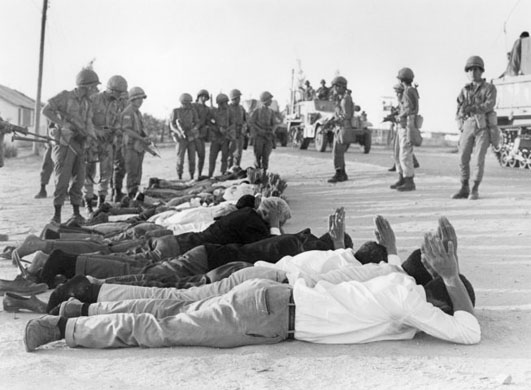
    Just by looking at hands and eyes of any individual, determining hostile intentions, aggression and preparedness of the same is quite easy. That's the very reason why hostile individuals and groups are asked to surrender themselves by dropping their weapons and hold their open palms behind their heads or high up. It is practiced globally during armed conflicts.

    Even if a person isn't carrying any weapon, tool or arm; the person's entire body unconsciously prepares itself to attack, hit and harm the other person. Both legs are placed apart, shoulders are raised, arms are flexed, feasts are clenched, jaws are tightened, gaze is fixated, nostrils are flared and eyebrows are furrowed under the hostile intentions.

    Sometimes, the face of individual, terrorist or extremist might be fully covered or protected which leaves no facial cues to be detected by any observer let alone a well-trained special forces operator. Even in such kind of situation, only hands and legs would provide the necessary clues to differentiate between hostile or friendly intention.

    In overall body language, both hands and legs provide the necessary cues of hostile or friendly intentions of any person who can walk on her feet.

    Related Articles:
    1) Observation is the key 2) Basic responses in stressful situations 3) Language of Eyes 4) Entire body can’t lie

    Inside Interrogation Room

    It all comes down to know what is truth behind the scene.Verifying the authenticity of information data being provided by individuals under investigation is always been a greater challenge for every Law Enforcement professional across the world. On the basis on the same, Law Enforcement agencies have to put up a case in the court of law to punish the criminals and protect the innocents.

    While statement analysis remains strictly confined to scrutiny and verification of facts and figures only, nonverbal or behavioral analysis of suspects and criminals provides a wide spectrum of information that otherwise doesn't ever come of the surface. Different nonverbal clues given away by the individuals under scrutiny can and do convey their affective (emotional), cognitive, associative and physical statuses at varying degrees.

    Hence nonverbal or behavioral analysis is critically importance during investigation, apart of verbal information being provided by an individual under scrutiny. For the same, interrogation rooms have been setup by Law Enforcement agencies in almost every country. Interrogation rooms are designed to discourage suspects and criminals from defending themselves and bring them to confess the crime or offense they (might have) committed.

    The kind of physical and psychological environment posed on unconscious mind of the individual under interrogation is that normally anybody could hardly manage to stay in for a long time willingly. Complete isolation from the rest of the world and the people is the key element to make an individual under scrutiny to feel completely alone, helpless and vulnerable. This puts a great pressure on the minds of many.

    An individual being interrogated is often discouraged to act upon its own will and defend itself physically. To add into intensity of pressure and stress, the individual is put right beneath a small light source so that rest of the surrounding area remains under darkness and the individual being interrogated can't find how many individuals and entities are present and moving around it in the same enclosure.

    Interrogation Chair ("Hot Seat")

    Along with the same, enlarged lurking eyes of the interrogators from darkness induces enormous stress inside the human mind just like what a prey would feel during the last few moments before getting hunted by a fierce and merciless predator in the dark and dense forest. Darkness, isolation, confinement, no protective barriers and also the lack of comfort are good enough to break down the individual's defenses.

    An individual being interrogated is often compelled to seat on a small chair with no arm rests thus restricting its movements to a limited physical area. However, interrogators can freely move back, forth and around it. In fact, they intrude personal comfort zone (personal and intimate zones in Proxemics) and try to break down psychological defense of the individual under scrutiny.

    Under the immense stress and/or discomfort, criminals and suspects easily leak out unconscious signs of distress that expert eyes can easily catch and capatalize them to drill deeper into the minds and brains of individuals being interrogated for their direct or indirect connection with the crime, offense or wrong-doing.

    True purpose of any interrogation procedure is not only to verify the information being provided by suspects and criminals but also to analyze their body language. The whole purpose it to try to detect the body language cue of lying or verbal deception, given by the individuals under interrogation or questioning.

    Solitary confinement to a limited physical space, being surrounded by unknown and strange individuals moving around in darkness and having no power of moving or defending oneself is more than enough to induce tremendous amount of stress to let true facts out and escape from the interrogation room unharmed, as early as possible.

    "Surprisingly, how easily, quickly or foolishly you get convinced by a lie is entirely dependent on YOU only. Yes! It’s you and nobody else i. e. your very own mental processing capacity, prior knowledge, awareness, perception, prejudices, urgencies, (mis)beliefs, biases and/or needs."
    - Body Language Insights (Book)

    [Special Note: Interrogation rooms and interrogation techniques might vary with country, agencies and interrogators. Some Law Enforcement agencies might follow different techniques and tactics to bring out the information and make an individual to commit the crime.]

    Related Articles:
    1) Observation is the key 2) Proxemics 3) Fear Factor 4) Body Language of James Bond 5) Face of liar(?) 6) Analytical Interview: Are HR Professionals ready for it? 7) Are you a 'flying' terrorist? 8) Baseline 9) Nonverbal Advantage in Investigation 10) Body Language and Lie Detection

    Secondary Attraction

    Finding a mate or a life partner is most crucial part of life. It has to do with not only with reproductive success and genetic progression but also emotional support, social status, overall stability, wellness, immunity and longevity. It consumes lot of energy and time and also preoccupies human mind.

    Despite of the enormous diversity in individual qualities, we try settle with an individual satisfying basic exceptions because a perfect mate is entirely mythical. Also, creating a strong functional rapport and sense of trust with partner and retaining it is a great challenge in itself.

    In a committed (marital) relationship, members of both genders have to submit and surrender themselves to each other at some extent. Both have to invest time, stay together, occupy a common physical space and share resources and engage with each other physically, sexually, emotionally, intellectually and psychologically.

    Now, assume that you are a single at present and desperately looking for a (new) partner. You come across many members of opposite gender, get attracted to them by instinct but you don't find something special in most of them to take relation to next steps. Why we don't feel "really going mad" about everybody we get initially attracted to?

    Psychologists, couple therapists and marital experts agree that what truly keeps two members of opposite genders together longer or forever is very complicated to describe in a few words only because it is totally apart of natural, sexual and plain physical attraction. They call it as the secondary attraction.

    "You really have something special that makes me to stay longer in relationship."

    Indeed, it's not just the look or the external appearance required to stay in (long term) romantic or committed relationship. Matter of fact is that how the an individually looks at outside necessarily should not match with its true internal nature in the human world. Definitely, there's something beyond physical qualities which we unconsciously look for into our potential partner(s) for the longer journeys.

    During initial interactions, we unconsciously monitor behavior and reactions of other person in different situations and circumstances. In fact, we give each other various opportunities for the same. More we interact, better we understand each other (apart of attraction). It's like initiating a dance step and waiting for a person on an opposite side to make move accordingly.

    We always convey personal traits, attitude, approach, qualities, strengths, and weaknesses and ultimately mutual compatibility through body language (nonverbally) only that's why mutual attraction based upon the true character lasts longer and healthier.

    Related Articles:
    1) Like attracts like 2) Courtship and Dance 3) Why we copy each other's body language? 4) Smell of love 5) Primary Attraction 6) What we seek in partner? 7) Know Who is Attracted to You