Search for

Child inside us

Irrespective of biological age, we all display different kinds of facial and physical expressions that let the other know about discomfort, anxieties, fear, liking, comfort and joy. However, early childhood brings a lot of challenges and also opportunities that we've to face with the help of our parents, care-takers and teachers.

Even after growing older, the basic patterns of expressions remain almost the same throughout the entire lige. However, a little fine tuning, mimicking, learning, pressure of mannerism and a lot of real world experiences make the adults to react, express and behave differently than children.

As with facial expressions, so with entire body body language! Body language go through several subtle changes in the adulthood due to external influence, mimicking, learning, pressure of mannerism and a lot of real world experiences around bold and clear expressions.

Also, we try to hide, minimize, suppress or even fake facial expressions for our own best interest. Additionally, we learn languages for communicating with people in replacement for some of the physical and facial expressions, emblems and gestures.

Please look at following pictures and find how children and adults show almost matching facial expressions and emblems. However, given below are a very few examples that came out of my own observations.

Ohh! Look at that. (Alertness)

Yuck! I don't like it. (Disgust)

Do you hear that? (Spatial focus)

I'm ready for photo. (Attention seeking)

When this all going to end? (Boredom)

Can you help me out of this? (Sadness)

What's that? (Surprise)

What a stressful life? (Self-soothing)

You are not listening to me. (Grieving)

Anything is not right. (Out crying)

Hey, nice to talk to you. (Cheerfulness)

It's really funny...I like it! (Amusement)

So horrible! (Terror)

Related Articles:
1) Basic emotional expressions 2) Why we smile? 3) Women are body language experts 4) Importance of Touch 5) Social Footsteps

Face to Face

Nowadays, in commercial and competitive world, it seems that we overrate "face value". It's all about the way we (try) to look, influence and attract people around us. We're always after enhancing inherited physical aspects, dress up nicely, groom well and even fake something we don't have originally.

Actually, our plain physical appearance, exterior or look doesn't get  the expected results most of the time. So what exactly we miss or ignore while communicating or interacting with people? What are the basic "x factors" our mind looks for?

Everyone knows well that we can't judge or evaluate anything or anybody without observing or sensing it face to face or in a reasonable proximity. Our eyes and other sensory organs play a crucial role in collecting information and trying to understand about anything we come across at every moment.

It's a quite prevalent and an observable phenomenon even in disabled persons that their other senses compensate their nonfunctional or disordered sensory organ(s). It's the process that runs continuously and our survival entirely depends upon the same. Can we ever imagine a person who is living perfectly (without any external aid) after its all senses disabled accidentally?

In the subconscious terms, today’s material, techniques, communication channels and concepts are different than that of ancient world but modern human beings haven't much changed a lot. We're very similar to our remote ancestors. Many a times, we realize that we behave, express, react and respond similarly to what we would have a thousands or millions ago.

In this modern, technological and globalized world; we still follow same rules that date back to the millions of years. Acquaintances and relationships also get developed over time by old rules and ways i. e. by judging mutual comfort, discomfort and trustworthiness. More we perceive a person as favorable for us; more we likely to connect ourselves with the person.

'Bridging' a great gap between each other

It’s almost a dynamic process than a static one and our opinions, judgements and views about each others might alter after every exchange. First impression may not last longer because it is mostly derived from the appearance, look or purposefully adapted avatar. The image gradually builds and keeps changing so there’s an opportunity to be hopeful about.

It may not be noticed consciously but we all express emotions, feelings and intentions about every other person we face or stay around. Perhaps, we couldn’t name each and every unspoken exchange taking place between two persons but our subconscious mind figures it out very preciously. It’s a very snap judgment that depends upon state of mind, outlook, phobias and complexes we develop over time.

Body shows how we evaluate and connect with others.

Face to face or up close interaction gives us unique opportunity to know others and let others know about us. It’s the way we evaluate or judge mutually and it’s at the core of every relationship. Our natural defense mechanism jumps into action at fullest the time we get face to face with each other.

Walking up to somebody and standing face to face is one of the greatest moments in body language because it can trigger fight or flight response. Hence, it becomes very decisive mode of interaction which is full of challenges and opportunities equally.

Related Articles:
1) Facial Feedback: World smiles with you! 2) Social Footsteps 3) My career saving lie detection 4) First Impression and Body Language 5) Confident Body Language 6) Human Interactions in AI Era

Keen observation is the key

Interpreting human (and also animal) nonverbal communication and body language is both an art and science. Keen observation, picking minute details and contextual analysis are absolutely necessities for becoming a proficient in people reading, before becoming expert.

It start with right from identifying the basic nonverbal patterns in different situations, environments and circumstances under which people you observe do move, behave, act, react, interact, respond and express themselves normally.

Airport, railway station, stadium, super market, auditorium, restaurant, park, garden, beach, disco bar, social club, festival, fair, party, exhibition, gathering, hospital etc. are locations where people from various age groups, ethnicity, cultures, genders, professions, places, statuses, socio-economical backgrounds, physical attributes and personalities gather, come together, share physical places and interact with each other and you can observe them very comfortably from a close distance.

While observing people, they should not notice that somebody is observing them because they may feel offended, nervous or behave differently. Subtlety, stealthiness and secrecy is the best policy. Observing without letting others notice about it is what exactly investigators, detectives, spies or secret agents do routinely by putting dark glasses, goggles or sheds on their eyes and behave normally.

Shopping malls are good places to observe a large no. of people.

Developing a non-interrogating, non-threatening and relaxed gaze helps you observe people safely. Also, the peripheral vision can greatly help you in the same. Due to wider peripheral vision, women have an innate ability to spot, observe, watch and spy on somebody without even looking at the person directly. That's the very reason why hardly anybody can catch them observing others in public.

Other safer, comfortable and convenient ways to watch people are still photographs, movie clips, television shows and candid video tapes. Beware before drawing firm conclusions from professional or paid acts, commercial advertisements and staged performances as they are scripted and shoot in a quite controlled o an artificial environments and also edited before broadcasting or making public.

However, they would greatly help you in sharpening your observation skill. Moreover, turning off the volume would be the best way to become more attuned to bare visual clues. Matter of fact is that noise, music, words and voices divert our attention from physical expressions and clues that are more profound, solid and reliable.

Silent or speechless movies are the great observational material to know underlying emotions and intentions that actors and actresses want to convey nonverbally. Watching movies in the language which you are not aware of is also a great learning material to speculate what actors and actresses would be talking in the given moment by looking at their physical expressions.

Always remember that the devil lies in details and ordinary or naïve people don't pay much attentions to same. More you start picking smaller details, better you become as an observer. It would bring you a tremendous advantage in becoming a great analyst in the future. Good and keen passive observation would enlighten you, broaden your social horizon, amuse you thoroughly and also invest your time only for good returns.

Related Articles:
1) Women are body language experts 2) Basic emotional expressions 3) Just by looking at Hands and Eyes 4) My posture discovery 5) Inside Interrogation Room 6) Body Language of James Bond 7) Asymmetrical Smile but not Contempt 8) Reading Body Language - Challenges 9) Decoding entrance of The Undertaker 10) Watching chess players 11) This is what I (want to) see. 12) Are you a 'flying' terrorist? 13) Entire body can’t lie 14) Nonverbal Advantage in Investigation

Job Interview Tips

Encountering with stranger or visiting new location at first time leads to some degree of anxiety so dose appearing for an interview. Despite of capabilities, experience and knowledge; we feel somehow uncomfortable simply because of location we would be interviewed at, kind of people we would confront and corresponding codes of conduct are not much known.

It’s the only the matter of time when interviewers form a firm opinion, a solid impression or a due judgement about you. It might happen right after some moments of conversation with you or in the end of the interview.

Keeping apart anxiety and nervousness, you can multiply opportunity of recruitment by proving yourself more compatible and self-controlling in the eyes of interviewers.

Here are some handy tips that you could follow very easily to improve your effectiveness.

1) Dress in formal and proper way. Match it with industrial norms you are going to work in. Choose fabric that suit you and help to feel comfortable.

2) Time’s the crucial part so make to it. Don’t make interviewers waiting for you.

3) Make acquaintance with other candidates facing interview. It will let you feel less tense. Avoid undue gossiping and whispering with them. Better engage in positive discussion. Try to get information about company and work you are supposed to do.

4) Wait for your turn with patience and stay calm. Try to know about the place. Read the documents you carry or read newspapers or magazines made available to you.

5) On facing interviewers, flash a smile. It will work like an ice breaker. Engage in hand shake if it is custom. Don't try to draw undue attention to yourself.

6) Never sit until interviewers ask you to. Adapt comfortable posture while you sit. Make less body movements and wobbles. Avoid fidgeting, jiggling or tapping. Avoid undue revolving the chair. Pay attention at your feet so that they don’t touch the others’.

7) Introduce yourself to them in polite tone of voice. Avoid gesturing as much as possible at this stage. Provide documents only when asked otherwise it would lead to distraction.

8) Make proper eye with contact with interviewers. Avoid sudden look away or crossing of arms over your chest. Avoid touching your face, neck or ears and running fingers through hairs. Avoid evaluating posture and signs of suspicion or boredom.

9) Make head nods when you understand questions and try lean a little bit forward while answering. If you can’t listen question clearly then ask them to repeat it with pardon. Don’t bother to repeat your answer too.

10) Remain open and mentally present in interview. More you stay focused less will be mistakes and miscommunication. Exhibit confidence and not arrogance.

11) When interview concludes, thank to the interviewers with smile. Take formal permission of leaving. Collect everything you brought at meeting place.

12) Avoid sharing your experiences with remaining candidates if you think it was a failure.

Remember that people take whatever you try to exhibit or hide in front of them and not the knowledge, abilities and experience you may have. It’s for sure that different work environments demand different things from us but some fundamentals remain same.

After all, any organization looks for basic qualities, social skills and behavioral aptitude in you perhaps more than the technical and business know-how.

Expressing confidence but staying polite at the same time is the greatest body language challenge for any candidate.

Related Articles:
1) Workspace Etiquette 2) Positive Body Language 3) Confident Body Language 4) What is hand shake? 5) Are you a 'flying' terrorist? 6) Power Postures

Workspace Etiquette

Dreaming a fabulous job or a profession, greater exposure to opportunities, timely admiration and awards, confidence of succeeding, playfulness, enjoyment and easiness to express yourself? Off course, all these things revolve around hierarchy, work culture, professional environment and management that promise about them to you.

We all spend most of our occupational time at work space. We work on routine basis, stay hours with people surrounding us, interact with them and share different things. It’s all we know and do generally at surface level. But at deeper level, we always send message to others in every form and even at the time we don’t talk.

Each and every piece of verbal and non-verbal communication at work place strongly affects our perception, emotions, energy, physical health, level of satisfaction, sense of togetherness and ultimately the performance and willingness to stay working with people.

Without cooperative and caring people around, feel easy air breathe and sense of well being, rosy rewards and abundance of facilities are just like formal payoff for working in hostile and hazardous environment where no one would likely to venture.

Let’s see how we can make work place wonderful and worthy to keep on working happily.

1) Would we like to start your day with no greetings or good wishes? Definitely not. Every time you reach to office, greet your colleagues with warm and friendly tone and smile.

It doesn’t take too much time and energy but certainly helps in keeping surrounding fresh and people feel good about themselves and ultimately about you.

2) Respect people around you and their precious time. Reasonably acknowledge their presence. Don’t take them granted as they are around you daily. Ask if you can help them anyway.

3) Maintain proper eye contact and stance while listening or approaching to others. Keep the cultural and social norms in mind. Don’t hang over the others. Keep correct distance and posture with member of an opposite gender.

4) Don’t impose your personal issues, headaches, failures and shortcomings by taking out frustration, grudge or anguish on others. Better you seat calmly, take a break, have a walk or discuss it with somebody you feel favorable and let negativity pass by.

5) Avoid formality if it doesn’t fit to given situation or condition. Expression of genuine feelings about others would help in creating good rapport apart of your credentials, authorities and proficiency.

6) Communicate with all others comfortably, fluently and spontaneously. Don’t stay stiff, aggressive, bothering or too much defensive.

Always keep in mind that awkwardness adds to more awkwardness day by day.

7) Complement or Express good wishes to your colleagues on their birthdays, anniversaries, milestones and achievements. Offer gifts and give surprises. It definitely helps in creating a positive atmosphere.

8) Keep concerned persons informed about your unavailability or absence. Making others guessing about your whereabouts during work hours simply wastes their time and develops sense of uncertainty about you.

9) Remember that you are not the owner of anybody's life. Don’t interfere with others' personal lives, relationships and belongings.

10) If you feel that anybody got hurt or offended, express your apologies from bottom of heart and possibly on face. It would let bitterness fall apart between you and others.

11) Have a friendly outlook towards others. Avoid using offensive, obscene or slang words or terms. Don’t bully, grill, dominate or make unfair joke about others.

Avoid undue gossiping and back slapping. Avoid unconformable touch, gestures, gaze and facial expressions.

12) Behave with others politely and in co-operative manner as much as possible. Admire in public and reprimand in private. Don’t beat your own drum at all the time. Everybody has ego and better it’s not hurt.

13) Development of affinity, likability, attraction and attachment between two members of opposite genders is quite natural and understandable.

Respect feelings of others but flirtatious moves or solicitations should be avoided, ignored or discouraged to retain its healthiness. Avoid running into an affair with member of an opposite gender which might spoil career (of both) and devastate existing relationships.

14) Respect the diversity of skin colors, languages/dialects, geographical origins, ethnicity, costumes, traditions and individual practices, aspirations, beliefs etc.

It’s not at all necessary that others should equally posses whatever knowledge, skills or efficiency you have. If everybody’s exactly like you then you couldn’t out-stand. Correct?

Remember that we work together after coming long away from our native places, homes and families. We are to support each other to achieve best things possible with skills and capacities we posses together.

Law of action and reaction works every where. It you want to be happy and feel better about yourself then help others feel same about them.

Unlike rest of the subconscious body language cues, ettiqute need to learned by oneself or taughed by others consciously.

Related Articles:
1) Conscious shift in body language 2) Elevator Etiquette 3) Job Interview Tips

Genuine Smile

Sudani woman with genuine smile
A smile is really contagious. You surely receive a smile in return from the person you smile at. However, sometimes, fake smiles are often exchanged as a formality and social ritual for avoiding the other person letting down.

For everybody of us, it's very important to know which facial muscles are involved that makes the great difference between a fake smile and a genuine smile in the first place. Let's try to know about the same.

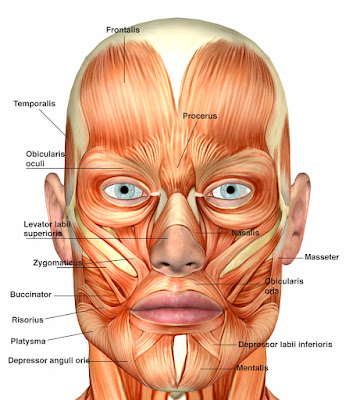
A thin band of zygomatic muscles on both side of the face arising from Zygomatic bone i. e. near ears and merging into Orbicularis Oris (circular muscles around mouth) and skin of mouth corners also contracts and pulls edges of lips upwards while smiling.

When we watch a face with a genuine smile, it definite casts the magic. A genuine, warm and friendly smile originates from the bottom of heart and spreads all over the face. Telling sign of it are crinkled eyes, crow's feet in area between eyes and ears, no signs of tension on forehead and no furrowing of eyebrows.

Emotional centers inside brain controls movements of facial muscles. Originality lasts longer like a lingering fragrance of the blossom. Same principle applies to expression of emotions too. That's why a genuine smile appears and fades away gradually. On the other hand, a fake smile appears and fades quickly.

One has to put lot of efforts in mimicking a genuine smile at best by pulling back edges of lips forcefully just for showing teeth while keeping eyes wide open. No crinkling or crow's feet appear near eyes. A fake smile appears shallow and it drifts away quickly as if it is accidentally or purposefully put on the face.

Which is a genuine smile? Left or right?

You may find sales persons, professionals, politicians, actors, actresses, models and celebrities quite often putting fake smiles on their faces. They are really good at it. Can you really spot a genuine smile? I think that you can.

Don't forget to check your personal score through this test created by BBC Science. Also watch this video by Prof. Dr. Ehsan Hoque, a prominent Affective Computing researcher.


Although a smile is the most commercially capitalized aspect of the overall body language, a genuine smile is really hard to fake.

Related Articles:
1) Why we smile? 2) Asymmetrical Smile but not Contempt

Genius of Acting

“All the world's a stage,
and all the men and women merely players:
they have their exits and their entrances;
and one man in his time plays many parts..."
- Sir William Shakespeare

Isn’t this quote true? Throughout life, we live upon instincts, emotions and thoughts. We are our own script writers but some people enact our lives. For them, it’s part of passion and profession. They don’t just act but they interact with our emotions and feelings at deeper level. They posses power to alter our thinking and perceptions about ourselves and the world around us. They amaze, mesmerize and hypnotize us.

Warm welcome to the wonderful and fascinating world of acting, actions and performances! This is an illusionary world in which creative of minds, imaginations and life like performances interlace and work in unimaginable dimensions. Actors and their performances have changed people and real world at lesser or larger proportions. The actors and actresses have personified audience through their body language. Haven't they?

We can’t relate ourselves with billionaires, bureaucrat or financial bulls very easily. We find ourselves quite close to performers who enact our pains, sorrows, joys, dreams, ambitions and despairs. Only genuine performances get standing ovation and awards because most people deeply feels as if not actual actors but they were performing on stage or in movie and perhaps wanted to act that way in their real lives too.

Putting pains in performance
Without such marvelous impression, movies and dramas wouldn’t have driven crowds crazy about their beloved superstars like Al Pacino, Elizabeth Taylor, Amitabh Bachchan (Superstar of the millennium), Rajinikanth (Cultural icon of Tamil cinema), Tom Hanks, Will Smith, Nicole Kidman, Jackie Chan or Russell Crowe and many more.

Despite of being a singer, Michael Jackson surmounted popularity worldwide only because of showing pain, anguish and gloom from bottom of his heart. In fact, he was the one who observed and experienced them closely in his childhood.

What exactly is being a true acting performer? To become one, an individual needs to study of human mind in depth, mastering different body movements, keenly observe the people (including oneself) and enact them at their best.

It's all about understanding natural expressions, behavioral patterns, body movements and overall mannerism of people and trying to enact them by imagining at best that how the character that they are playing would and should do in given situation and circumstances. Living a character at its best throughout the performance is very important.

Japanese actor
We have heard about many actors and actresses who got deeply involved into characters they played in dramas or movies. They could not get out from psychological state of major character role they have played. Characters take grip the mind of actors over a long duration.

This happens due to brain’s natural response to emotions they portray on face consciously as demand of roles. That’s why they need to be very impartial about different roles they (choose to) play.

What make audience truly fascinate is synchronization of tone of voice, pronunciation, facial expressions, gestures, postures and body movements. Micro and subtle expressions on face can make any character very intriguing to observe by both people and critics.

Successful performers know very well that how to convey emotions of the characters they play more silently. Blinking of eyes, tiniest flutter of facial muscles, gentle touch or fidgeting with objects bring transcending effect that words can't achieve.

Nonverbal Acting Legend
Gone are the days when movies used to be silent i. e. without any dialogs. We can only imagine the kind of skill and sensibility required to enact without words. Performers had to utilize their faces and bodies only and nothing else to convey what they meant to convey.

Entire facial expressions and body movements needed to perfect enough to understand the character. One of the legendary actors that still rules over the heart of millions is Sir Charlie Chaplin. He became immortal on silver screen by the characters he played at his best.

Off course, we cannot underestimate the combine efforts that are taken on script, dialogs, costume, makeup, background music, lights, set and specials effects. They get dissolved in performance and still make their effect felt. They share success equally without any doubt. In fact, all performances entirely depend upon a good script and direction.


Being a theatrical icon or movie superstar is a long, continuous and tough journey. Facing camera or audience on stage is not that easy. However, once you get in tuned with true spirit, you can master your performance. In drama, everything goes live and you don’t get second chance to correct mistakes. Only committed people to this field have glorified it.

Mr. Vijay Albal (Co-author)
[Co-author of this post/article is from Pune, India. Currently, he is working as a quality assurance professional in an international product based software company. Apart of his profession, he's active in theatrical performance, scripting and direction.]

Related Articles:
1) Unlimited potentials of nonverbal knowledge 2) Basic emotional expressions 3) Indian Classical Dances

Secret behind imitation

Don’t we imitate or copy each others at all? Let’s ask this question to ourselves. A lot of times, we hear typical sentence that an individual makes e. g. “If I couldn’t match with pace and manners of world or people around me, I would be left behind or rejected.” Such kind of sentence may repeatedly boom in our heads just because the fear of getting lagged behind or left all alone has been hard coded in our unconscious minds. Why exactly imitation came into existence in the first place?

Imitation makes every person look alike.

Amazingly, human race is the most imitating land dwelling species. For achieving seemingly impossible to other creatures, our ancestors had to work together and imitate each other as much as possible. One initiated something on its own, reaped some benefits from the same and the others followed, mimicked or imitated the individual, almost mechanically.

Imitating is to perform, maneuver, behave, express, act and gesticulate like other individual. That’s it! We have defined it so simply but it’s not over yet. The next question comes into out mind is that why exactly imitation has been hardcoded into our genes. It's really harder to believe but imitation has to do with survival.

Our tribal ancestors talked in same language or dialect, adapt same mannerism, followed same methods, built same types of houses, painted or decorated bodies, used same weapons or tools and created sounds alike. All these things gave them strength to stand against their predators and rival tribes also. It happens even today!

In today's modern technological world, living is quite easy as compared to what it was thousands and millions years ago. Our ancestors used to leave in jungles while facing dramatic and dangerous conditions. Their entire life was surrounded by fiercest predators lurking behind trees, bushes or tall grass.

Like the predators, there were rival tribes competing, fighting and even killing over resources and geographical territories. In the result of the same, living alone was the greatest risk to life of an individual. Only solution was to live in small clans, closer to other clans and form a tribe.

We often watch a terrifying scene on television channels showing a predator hunting down a prey to eat. The apex predator like lion chases a stag, grabs and kills it to death. Despite of power, speed and tactics; almost all predators can concentrate on just single prey at a time and not the whole herd.


Predators choose a prey that isolated from its herd and most importantly - physically weaker. On the other hand, coming together, appearing and acting like each other multiply chances of survival. Hence preys in herds adapt dramatic strategy that defend them against predators.

They stand together, stay very close to each other, move at same speed, move in same direction, make loud noise together, synchronize their body movements and make same kind of gestures or expressions. Ultimately, a whole group appears like a single larger and powerful creature.

The confused, baffled, overpowered and visually overwhelmed predator can only think about finding another solitary, small and weak prey elsewhere rather than wasting time and energy to hunt nothing and most importantly - avoid getting killed in the process.


Perhaps, the mimic octopus is the master of disguise, deception and camouflage which can rapidly match body colors, patterns, textures and behaviors of other creatures to save itself in the open ocean filled with the variety of predators.

Imitation or copying each other's body language is one of greatest evolutionary gifts. Human race has done a lot of progress only through copying or imitating each other.

Related Articles
1) Why we copy each other's body language? 2) Dominance 3) Facial Feedback: World smiles with you!

The smell of Love

Fragrance of fresh flowers or ripening fruits, aroma of delicious food or hot coffee, scent of soil after first shower or burning incense sticks…all alluring and mesmerizing. Their unique smell draws our attention towards them in no time, even if we can’t see, touch or taste those things immediately. We can instantly judge quality, freshness and even taste by just smelling them.

It's quite unclear to understand for an average individual but we all follow our noses very well almost all the way throughout our lives, right from birth till death. Smell is so special for our sensory experience that it unconsciously regulates and detects our mood. More surprisingly, it rules over our love lives too. Wondering why?

Each one of us has unique smell even though we can’t whiff it easily. As like finger print, you may also call it as smell print. More specifically, it is called as pheromone. Pheromones work by two ways in our intimate life i. e. first for connecting with persons that are close to us and other for finding marital and romantic partners and reproduction.

Body smell has stronger links with our genetic profiles and heredity. In very close blood relationship, body smell of one person is almost identical with the other. This amazing natural gift creates an enduring bond among family members which starts with birth itself.

Newborn baby feels easy and comfortable in presence of her mother around. You experience warmth and closeness when you give hug to your parents. Your affection soars when you cuddle your child in arms. It’s very common experience for most of us.

Someone passes by and you suddenly feel a strange pull towards the person without any clear and apparent clues. A random person belonging to the opposite gender you meet and interact with casually, one day knocks right on your heart and you wonder what happened all sudden.

On the other hand, two persons belonging to opposite genders can’t think about shifting their informal relation into a romantic stir even when they are seemingly attracted towards each other and observing strong solicitation, smiles and signaling. Beyond physical look, does body smell control our love life?

Body smell attracts opposite genders towards each other but conditionally. Courtship and company is vital in everybody’s life so equally crucial is the match between both partners best possible. Breeding between members of close blood relation leads to deformations and disorders in child. Male and female of dissimilar genes can give birth to more healthy children.

That’s why body smell of a person belonging to a dissimilar genetic profile appeals the most at the deeper level. Most people would confess that he/she didn’t smell right or not at all to them. The marital or romantic partners with dissimilar MHC (Major Histocompatibility Complex) profiles are most likely to stay together longer.

Unfortunately, most of us mistake natural body smell as an odor and try to suppress it every way possible. Body smell represents overall health, physiological equilibrium, reproductive potential and vitality. It might alter with passing age, hormonal change, fat gain or loss, medication, diseases, diet and other habits.

Today, we are spoiling this natural gift by moving into an ultra-hygienic state. Soaps with strong (hazardous) chemicals, shampoos, bleaches, deodorants, artificial perfumes, body sprays, synthetic fabrics and hot showers diminish natural smell of body thus misguiding our minds on way of finding and retaining true love.

The body smell or odor is one of least written over subjects in the body language. So I thought to give you a brief idea about the subject through this small article.

Related Articles:
1) Courtship and Dance 2) Primary Attraction 3) Man’s Courtship Body Language 4) Woman’s Courtship Body Language (Part 1) 5) Woman’s Courtship Body Language (Part 2) 6) Secondary Attraction

Why we hug?

Hugging is an integral part of most cultures and societies world wide. Animals too do hug each other. Hugging goes beyond formality to boost intimacy and sympathy. It’s performed to express warmth, protectiveness, brotherhood, support and affection towards each other. In all kinds of close relationships, we hug each other.

Why hugging someone is so magical, heartfelt and mesmerizing? It is strongly related with our physiology and psychological defense system against adversities. A hug is offered or received when a person truly wants to be cherished or relieved at deeper level by someone else.

Do you remember the last time you crossed arms over your chest while feeling insecure? Touched, covered and scratched your neck while feeling threatened? Stood by pushing your back against wall while feeling despaired? All these body parts are the most vulnerable so any harm or injuries to them would lead to serious impairment or death.

While hugging, we firmly touch chest and neck of other person with same body parts of our own. Also, we wrap our arms over unprotected back of each other. By doing this, we offer each other the same security and soothing which is provided by our parents or elders during childhood.

Hugging is the most defenseless and welcoming approach of both persons towards each other, unconsciously saying, “We are mutually and voluntarily exposing and touching most vulnerable and sensitive part of each others body. We don’t hold any defense. We protect each other (by covering back by arms) and we are very intimate, trustworthy and affectionate.”

Hugging each other might remain an outlandish or old-school ritual for touch reluctant people of modern generation but they won't understand the importance of same until they receive warm hug and feel its power by theselve.

Unlike shake hand and smile, giving a hug or hugging is one of the most neglected or undervalued body language aspects in the modern human world.

Related Articles:
1) Making true friends 2) What is hand shake? 3) Why we smile? 4) Why we wave hand at others? 5) Importance of Touch

Why we smile?

Grimacing monkey
A smile is a magical tool in human society. It helps in winning people’s hearts and draw sympathy and favor. Smiley and emoticon have become integral part of text messaging and chatting applications around the world. We feel quite better when somebody smiles at us and we smile in return. Smiling person is like and loved the most than the one who presses lips tightly and glares at you.

Why we smile at each other so instinctively i. e. without training, instruction or compulsion? The answer to this question is both exciting and bizarre. My very own hypothesis about its origin, briefly titled as "Harmless Teeth" is as following. Please don't forget read it till the end.

Very few of us might know that our primate cousins (apes and monkeys) also smile at each other. When two primates stand in front of each other or pass along side, they open their mouths slightly so that their teeth should get displayed. In their society, smiling has a lot to do with social harmony, dominance and survival. Smile has almost similar value in human society too.

Dr. Paul Ekman
expressing anger
By doing this, they make each other feel safe by passing a message, “Don’t be afraid! I’m not baring my teeth at you. I’m friendly!”. It's only the dominant male in their group who doesn't show his teeth to others. He uses his teeth only to bite and injure his sub-ordinates or rivals to proclaim his superiority or control.

In face-to-face encounter, direct eye contact made with enlarged eyeballs and pressed lips is a classical sign of threatening, intimidation or hostile intentions. If any person is confronting to such kind of eye contact made by others for a considerable amount of time, it’s assured that it would result in either running away or retaliation through Amygdala Hijack.

Elongated hostile gaze leads to parasympathetic distress and our primate cousins use same strategy smartly. Dominant male gorillas stare with hostile facial expressions to control a large group of sub-ordinates and to deter rebellions or rivals. It's a sort of territorial invasion with eyes and also an invitation to fight.

According to my hypothesis, ritual of smiling is comparatively less related with lips and teeth than eyeballs and gaze. Orbicular muscles (Orbicularis Occuli) around the eyes unconsciously contract while smiling to convey that an individual is afraid of other person(s) during face to face encounters, confrontations and interactions.

43 different facial muscles

Displaying teeth along keeping eyes smaller in appearance creates overall effect of harmless intentions. Otherwise, displaying teeth by opening lips but deliberately keeping eyes wide open at the same time simply looks comic, weird and frightening. Also, clenching jaws and displaying teeth by opening lips at the same time also doesn't create the expected effect of harmless intentions.

Additionally, contracted orbicular muscles help in protecting eyes from possible attack and also reverse the effect of the stronger, hostile and dominating gaze i. e. our eyeballs appear smaller than their normal size. Along with the same, separation of both lips and turning their corners upward might have evolved to enhance orbicular muscles (Orbicularis Occuli) contraction.

A thin band of Zygomatic muscles on both side of face arising from Zygomatic bone i. e. near the outer edges of eyebrows and merging into Orbicularis Oris muscles (circular muscles around lips) at both corners of mouth contracts and pulls the edges of lips upwards while we smile. Also the puffed cheeks due to this pull provide an additional protection to eyes.

Air hostesses smile a lot during the flight
to keep the distress low in the passengers.

Smiling or looking at the smiling faces associated with Endorphin (a neurotransmitter) secretion. It induces feeling of happiness in mind even if smile is genuine or fake one. We portray different kinds of smiles for expressing appeasement, acceptance, approachability, innocence, happiness, friendliness, agreeableness, fondness etc. All of these facial expressions are non-threatening for others.

Very shocking it might sound for most of us but we can portray 43 different kinds of smiles. Also, a smile is the most commercially capitalized aspect of the overall body language.

[#Special Note: This articled has been accepted by, translated into Spanish (Española) and posted on Evidentia University (Behavioral and Forensic Sciences) website. It's URL is https://evidentiauniversity.com/es/blogs/clublenguajenoverbal/por-que-sonreimos]

Related Articles:
1) Why we wave hands at others? 2) Positive body language 3) Making true friends 4) Woman's courtship Body Language (Part 1) 5) Woman's courtship Body Language (Part 2) 6) Primary Attraction 7) Why we hug? 8) Genuine Smile 9) Child inside us 10) Importance of Touch 11) Asymmetrical Smile but not Contempt

Making true friends

Friendship is the fathom of familiarity. It’s an invaluable and marvelous treasure that everybody wants to discover throughout lifetime. It enlightens life for once and all. Friendship is a perfect mirror in which one can get glimpse of true nature and meet very potentials through sympathy, mutual confidence, encouragement, co-operation, constructive criticism, idea generation, due appreciation, support and solidarity.

Initiating friendship or acquaintanceship at once is different than retaining and flourishing it further. Many aspects of positive body language can help you to invite persons into friendship but ultimately it’s quite sustainable process of reciprocation and resemblance.

Following are most crucial clues which would help in both finding and making friends you truly deserve:

1) Approach: Approaching to or facing somebody in non-threatening, casual and open-minded manner is the foundation of any relationship. Walk towards or face the others cheerfully and confidently. Do smile, wave hands and strike conversation with any suitable opening line like “Hi”, "Hi There", “Hey”, “How are you doing?”, “What’s up?”, “Nice to see you.”, “How the things are going on?”, “Hope you doing well.” etc.

Shaking hand is very good at initial stage but when familiarity gradually forms then do avoid it. Instead of hand shake, do start touching the person (if socially or gender appropriate) briefly at forearms and shoulders.

Don’t cross your arms on chest, entwine them behind your back or put them in pockets, purse or hand bag. Don't shrug shoulders or turn torso away from person. Turning your back suddenly at person is utterly disgraceful.

Even how you look at somebody does convey a lot more than actual words pretend. Try to maintain 70-75 % of steady eye contact during face to face interaction. Also, avoid standing or sitting on exactly an opposite side of man and side way of woman as much as possible. Comfort level with steady eye contact may vary in different cultures and societies.

When time comes to apart, end conversation with any suitable opening line like “Bye”, “See you.”, "Good Day", "Take Care", “Meet you later.”, “Talk to you later.”, “Best of luck.”, “Nice to see you.” etc. Wave hands, smile and walk away.

2) Active Listening: Just hearing to anybody is absolutely different from listening to it actually. Listening is mentally engaged state that reflects your true interest and attachment towards the other. When somebody’s distressed, despaired or disheartened then he/she really wants other to carefully listen or even synchronize emotionally.

Active listening and querying about what other person feels at given moment can strengthen any relationship more rather than giving quick solutions and let emotional intricacies remained unheard. Nod you head in agreement repeatedly while you listen. Conscious mirroring is very good.

3) Expressiveness: Everybody has an equal right of expression and it should be exercised. In friendship, one should encourage other to talk freely about feelings and experiences. It creates very conducive environment. Don’t impose yourself onto others every time. It would compel others to withdraw, frown or irritate.

Don’t lean over others or look with contempt. Just sit or stand straight and let others to take their turn. Be curious towards the other while they share.

4) Reconciliation: Reconciliation is crucial to heal any annoyance, hurt or distress caused by action or behavior from either side. If somebody gets hurt then lean forward, bow your head, put your palm on your heart and simply say “Sorry”, “I feel very sorry” or “Sorry, I hurt you.” from bottom of heart and with very soft voice.

Gently touch the other person by grabing its hands, touching shoulders or face or giving a hug (if socially or gender appropriate). Look at face and try to catch its gaze. Look directly into its eyes and and ask that If he/she could excuse you for whatever you did or gone wrong from you.

5) Support: It's the core of any relationship. Everybody of us unconsciously seeks support the way how we grow up by constant attention and care taken by parents during early childhood. If situation allows, put your hands behind shoulder of other person while standing, seating or walking (if socially or gender appropriate). By this, you make other person feel secured by you.

Take every opportunity to congratulate other person. Do genuinely appreciate achievements, performance or appearance. Frequently ask others about their well-being and if you could help them anyway.

6) Reciprocation: Sharing and exchange gives unprecedented joy and feeling of satisfaction. This is very common experience and our society and culture encourages it. Reciprocation makes relationship valuable are worth sustaining.

When somebody spends time, intellect and energy to exchange resources, ideas, opinions, information, complements, thoughts and feelings with you then you should duly recognize them and appreciate efforts or intentions of other person. Try to share in return of same from your side as much as possible and whatever appropriate is.

Despite of freedom everybody has to befriend and enjoy great things in life, some limitations and constraints should not be violated. Respect other as an individual first. Take their personal responsibilities and social roles into account. Avoid expecting (an immediate) response from others every time you initiate an exchange.

Also, let others know about your inability to meet, talk or exchange if situations and circumstances don’t allow. Don’t make others to feel bother with childish comments and queries.

Avoid excessive touching and crossing intimate boundaries of others (especially a member of an opposite gender). Avoid intimate gaze, flirting, suggestive gestures or submissive facial expressions with member of an opposite gender.

Attraction for a member of an opposite gender is quite natural, obvious and inevitable but trying to transform the friendship into a romantic relationship may not assure its survival a over long time. Friendship and romantic relationship are two entirely different areas in the first place.

One person may not behave in romantic relationship the way he/she supports and appreciates you as a friendship. Indeed, man and woman can become very best friends forever if they develop good mutual understanding and mind their existing relationship, social responsibilities, goals and aspirations.

Related Articles:
1) Positive Body Language 2) Why we wave hands at others? 3) What is hand shake? 4) Why we copy each other's body language? 5) Why we hug? 6) Why we smile? 7) Importance of eyes in relationship 8) Importance of Touch 9) Proxemics